AI Assistants Explained: Definition, Types, and Real Uses
Published: 21 Nov 2025
Artificial intelligence (AI) is no longer a future concept; it is now a part of our daily lives. AI assistants are everywhere, ranging from Siri and Alexa to ChatGPT and Google Assistant. But what is an AI assistant, and why is it so important?
In this article, we’ll define what an AI assistant is in simple terms, explain how it works, describe the many varieties available, and discuss the practical advantages. Whether you’re a student, a company owner, or just interested in technology, this article will explain how AI helpers are altering the way we work and live. If you want to understand more about AI first, check out our guide on What is Artificial Intelligence.
What Is an AI Assistant?
An AI assistant is a virtual assistant powered by artificial intelligence that understands natural language and performs functions such as answering inquiries, creating reminders, or offering assistance. Examples include Siri, Alexa, and ChatGPT. Its primary purpose is to save time, increase productivity, and simplify daily tasks.
How Does an AI Assistant Work?
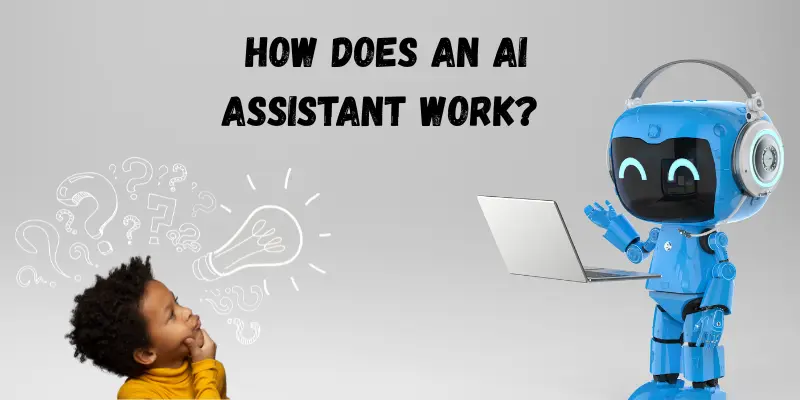
An AI assistant works by receiving your request, understanding it, and then providing the appropriate response or action. First, it hears your voice or analyzes your text. Then, using Natural Language Processing (NLP), it understands what you mean. Following that, it uses Machine Learning (ML) and built-in data to identify the best solution or complete the task, such as setting an alert or delivering information. Finally, it responds to you often in real, humanlike language. As you use it more, it learns and improves.
Types of AI Assistants
AI assistants come in different types, each designed for specific needs:
- Personal AI Assistants: Tools like Siri, Alexa, and Google Assistant that help with daily tasks such as reminders, calls, and smart home control.
- Business AI Assistants: Enterprise technologies that help with customer service, process automation, and team efficiency.
- Domain-Specific AI Assistants: specialized for industries like healthcare, finance, or education to answer expert-level queries.
- Voice-Based AI Assistants: Focus mostly on voice requests and spoken answers, such as Alexa or Google Home.
- Chat-Based AI Assistants: Text-based assistants such as ChatGPT or internet chatbots that answer via written communication.
Key Features of AI Assistants
AI assistants come with several smart features that make them useful in daily life and business:
- Natural Language Understanding (NLU): They can understand human language, whether spoken or typed.
- Voice Recognition: Many devices can respond to voice commands and respond in real time.
- Personalization: They learn from user habits and make personalized suggestions.
- Task Automation: From setting reminders to sending emails, they handle repetitive tasks.
- Integration with Apps & Devices: They connect with calendars, smart home devices, and business tools.
- Continuous Learning: With Machine Learning, they improve accuracy and performance over time.
Use Cases & Real-Life Examples
AI assistants are commonly used for personal projects such as reminders and smart home control, in companies for customer service, in education for learning assistance, in healthcare for appointments, and in retail for suggestions. Their role is to reduce time, increase production, and make life simpler in several professions.
Advantages of AI Assistants
AI assistants bring many benefits to both individuals and businesses. Here are the key advantages:
- Save time: Quickly do regular tasks like reminders, emails, and searches.
- Increase Productivity: Assist with scheduling, meetings, and processes.
- 24/7 Availability: We are always ready to reply, anytime and wherever.
- Personalized Support: Learn about user behaviors and make targeted recommendations.
- Cost-effective: Automating customer care and repetitive tasks may help businesses cut costs.
- Continuous Improvement: Using machine learning, you may gradually get wiser.
Challenges & Limitations
While AI assistants are powerful, they also come with some challenges and drawbacks:
- Privacy Concerns: They collect and handle user data, which may pose security problems.
- Bias in Responses: Because they learn from data, they can show bias or provide incorrect responses.
- Limited Understanding: Complex, unclear, or context-heavy requests can confuse them.
- Dependence on the Internet: Most assistants require a stable connection and up-to-date data to function properly.
- Lack of Human Touch: They cannot completely replace empathy and judgment in sensitive circumstances.
- Cost of Implementation: Advanced AI assistants for businesses may demand a significant investment.
For more detailed insights on AI’s impact, see Advantages and Disadvantages of Artificial Intelligence.
How to Choose the Right AI Assistant
With so many alternatives available, selecting the best AI assistant is dependent on your requirements. Here are the main factors to consider:
|
Future of AI Assistants
AI assistants are fast improving, with the future promising continuously smarter and more advanced features, such as:
|
Conclusion
In this tutorial, we looked at what an AI assistant is, how it works, the many types, advantages, challenges, and future developments. We hope this post provided you with the information you were looking for and addressed your questions properly.
AI is growing quickly, and AI helpers are becoming an integral part of daily life. If you want to continue learning more about AI and its uses, stay connected with us, and we’ll continue sharing simple and helpful guides.
Frequently Asked Questions (FAQs)
Here are some common questions people ask about AI assistants:
An AI assistant is a digital assistant that understands your commands and performs duties such as answering inquiries, making reminders, and managing gadgets.
It listens to or reads your request, processes it using AI technologies, and gives the best response or action in natural language.
Yes, but safety depends on how they handle data. Always check privacy settings and use trusted platforms.
They are predicted to grow increasingly humanlike, intelligent, and integrated into everyday life and business.





- Be Respectful
- Stay Relevant
- Stay Positive
- True Feedback
- Encourage Discussion
- Avoid Spamming
- No Fake News
- Don't Copy-Paste
- No Personal Attacks
- Be Respectful
- Stay Relevant
- Stay Positive
- True Feedback
- Encourage Discussion
- Avoid Spamming
- No Fake News
- Don't Copy-Paste
- No Personal Attacks
